

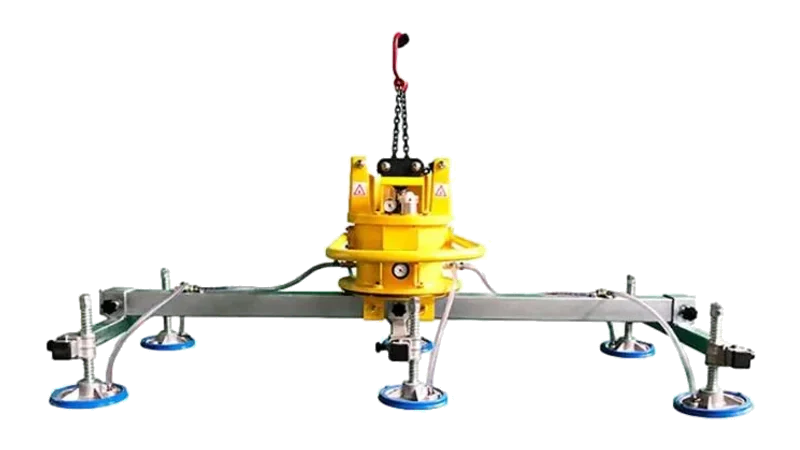


Safe Working Load (SWL) is a term commonly used to describe the maximum load that lifting equipment can safely handle under specified operating conditions.
In modern lifting terminology, Working Load Limit (WLL) and Rated Capacity are also commonly used.
Understanding the load rating of lifting equipment is essential when selecting and using cranes, hoists, lifting beams, slings, vacuum lifters and other material handling equipment.
Why Is SWL Important?
Every item of lifting equipment is designed to operate within a specified load capacity.
Exceeding that capacity can place excessive stress on the equipment and may result in equipment damage, load instability or failure.
Before carrying out a lift, operators should understand:
- the weight of the load
- the rated capacity of the lifting equipment
- the configuration in which the equipment is being used
- the effect of slings, attachments and lifting angles
- any operating limitations specified by the manufacturer.
SWL vs WLL — What Is the Difference?
The terms Safe Working Load (SWL) and Working Load Limit (WLL) are sometimes used interchangeably in everyday industry language.
However, WLL is now commonly used in Australian lifting standards and guidance when referring to lifting gear and attachments.
The important point for an operator is simple:
Never exceed the rated capacity specified for the equipment and its particular operating configuration.
The Capacity of a Lifting System Is More Than Just the Hoist
A lifting system often contains several components.
For example, a crane installation may include:
Crane → Hoist → Trolley → Sling or Lifting Attachment → Load
The complete lifting system needs to be suitable for the intended load.
A 1,000 kg hoist, for example, should not be treated as a 1,000 kg lifting system if another component in the lifting arrangement has a lower allowable capacity.
The capacity of each component and the configuration of the lift must be considered.
Lifting Angles and Configuration Matter
The allowable load on some lifting equipment can change depending on how it is used.
Slings are a common example. Sling angles and lifting configurations can alter the forces applied to individual components.
Other equipment may also have different rated capacities depending on:
- boom or jib position
- working radius
- attachment configuration
- load centre
- lifting angle
- operating environment.
This is why the manufacturer’s load information and operating instructions should always be followed.
SWL and MHS Lifting Equipment
This is where I want the main internal links.
At Materials Handling Solutions (MHS), we supply and develop lifting and material handling equipment for industrial applications throughout Perth and Western Australia.
Cranes and Jib Cranes
We supply cranes and jib cranes including freestanding, wall-mounted, gantry, monorail and light crane systems.
Hoists
Our range of industrial hoists includes electric, air and manual hoisting equipment for a wide variety of lifting applications.
Vacuum Lifters
Our vacuum lifters provide lifting solutions for sheet metal, glass, pipe, cartons, bags and many other materials.
Lifting Attachments
We also supply special-purpose lifting attachments and can develop custom-engineered lifting solutions for unusual applications.
Need Help Selecting the Right Lifting Capacity?
Choosing the correct lifting equipment involves more than simply knowing the weight of the item being lifted.
The load, lifting method, working radius, attachment type and operating conditions can all affect equipment selection.
Contact Materials Handling Solutions if you need help selecting a crane, hoist, vacuum lifter or lifting system for your application.
Discuss your application in Perth
Include the load weight and dimensions, the movement you need to make, and your delivery suburb when requesting an equipment quote.