
Conquer Sheet Metal Handling with the Victory Titan Sheet Lifter from Materials Handling Solutions
The Power of Vacuum Lifting Technology

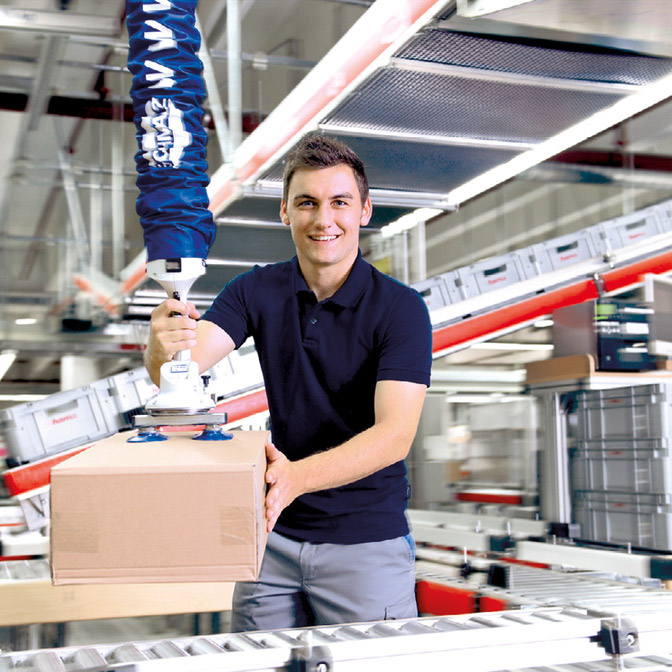
The Victory Titan Sheet Lifter harnesses the power of vacuum technology to transform sheet handling into a safe, efficient, and ergonomic process. This innovative lifter allows one person to effortlessly lift and tilt even the largest and heaviest sheets, eliminating the need for multiple workers and the associated risks. MHS can provide the perfect Victory Titan solution to meet your specific needs, ensuring a perfect match for your operation

Unmatched Lifting Capacity and User-Friendliness

The aptly named Titan lives up to its reputation. This range of robust lifters starts at 300kg capacity and goes up to a remarkable lifting capacity of 2,000kg. Allowing the operator to handle large sheets of metal with ease. The user-friendly control panel provides precise manoeuvrability and ensures safety for both the operator and the load. Conveniently mounted to an electric or air hoist, the Titan Sheet Lifter offers optimal speed and control during lifting operations.

Effortless Tilting and Maneuvering

Tilting and rotating large sheets can be a back-breaking and time-consuming task. The Victory Titan Sheet Lifter eliminates this struggle. The lifter allows for effortless tilting of the sheets up to 180°, regardless of the operator’s physical strength. With minimal effort, sheets can be positioned and manoeuvred with complete precision. Added to this there’s no damage like scratches or marring to the sheet. The soft vacuum grippers simply suck on to the sheet leaving no imprint at all.

High-Speed Handling for Increased Productivity

For businesses that require frequent sheet lifting, maximising speed is crucial. A vacuum sheet lifter is the ideal solution, allowing the operator to quickly pick up, lift, and move sheets into place with a simple grip on the ergonomic handle. This efficient and effortless approach to sheet handling translates to significant time and cost savings for your business.

Materials Handling Solutions: Your Trusted Partner in Sheet Lifting

Materials Handling Solutions has over 28 years of experience in vacuum lifting technology, making us your trusted local agent for all your sheet lifting needs. We understand the importance of keeping your operations running smoothly. That’s why we maintain an extensive stock of spare parts, ensuring minimal downtime in the event of maintenance requirements.

Contact Materials Handling Solutions today to discuss your specific sheet lifting needs and discover how the Victory Titan Sheet Lifter can transform your operations and empower your workforce.

10 Most Frequently Asked Questions

Q: What is a sheet lifter and what types of materials is it designed to handle?

A: A sheet lifter is a piece of equipment specifically designed to lift and move flat, sheet-like materials safely. This can include metal sheets, steel or aluminum plates, large pieces of glass, or other flat panels. The sheet lifter creates a secure hold on the sheet (often using vacuum suction or clamps) so that a single sheet can be hoisted without bending, slipping, or needing multiple people to support it. It’s especially useful in industries like metal fabrication, glass manufacturing, or any setting where large sheets need to be regularly moved or positioned.

2. Q: How does the Victory Titan Sheet Lifter make handling sheet metal easier?

A: The Victory Titan Sheet Lifter, offered by MHS, is engineered to simplify and speed up sheet metal handling. It uses a powerful vacuum system to grip sheet metal panels securely. One of its key features is the ability to tilt sheets by 90 degrees – meaning you can pick a sheet up from horizontal storage and then tilt it to a vertical position (or vice versa) for installation or machining. This tilting and maneuvering capability means fewer people are needed to handle a sheet and the risk of dropping or warping the metal is greatly reduced. High-speed handling mechanisms also allow for quick attachment and release of sheets, improving throughput in a busy workshop.

3. Q: Can the sheet lifter rotate or tilt sheets for better positioning?

A: Yes, many sheet lifters – like the Victory Titan – are designed to both lift and tilt sheets. The 90° tilting feature is particularly useful: for example, you might need to take a sheet that’s lying flat on a stack and then stand it upright to place it on a cutting machine or into an assembly. By tilting mechanically, the lifter handles the heavy work and the precise positioning, reducing the chance of human error or injury. Some advanced models can even rotate sheets in the horizontal plane, but the key movement for most sheet lifters is that vertical flip which is essential for safe handling.

4. Q: What thickness or weight of sheet metal can this lifter handle?

A: The capacity of a sheet lifter like the Victory Titan depends on the specific model, but generally they are built to handle quite heavy loads – often hundreds of kilograms per sheet or more. They can usually manage common sheet thicknesses used in fabrication (for instance, steel plate several millimeters thick). For example, one might handle a steel sheet 6mm thick and several meters in size, which could weigh a few hundred kilos. It’s important to consult the specifications: MHS will specify the maximum weight (or thickness and size) the lifter can safely lift. Using the lifter within those limits ensures it performs effectively and safely.

5. Q: How does using a sheet lifter improve safety and efficiency in a metal fabrication shop?

A: In a metal fabrication shop, raw material sheets are often large and heavy – traditionally requiring multiple workers to move them, which is time-consuming and risky. Using a sheet lifter means one operator (with possibly a helper guiding) can do the job quickly. This greatly reduces the physical strain on employees – no one is trying to muscle a 200 kg steel plate by hand – and it minimizes accidents like sheets dropping or edges causing injuries. Efficiency goes up because sheets can be moved to machines or storage faster, and precisely when needed, without waiting to gather a team. Plus, the lifter can position the sheet exactly as required (flat or tilted), which speeds up loading it into cutting or forming equipment.

6. Q: Is the sheet lifter compatible with cranes or forklifts for operation?

A: Typically, a vacuum sheet lifter like the ones MHS provides is used in conjunction with an overhead crane or a jib crane in a workshop. The lifter itself attaches to the crane hook, and the crane provides the up-and-down lifting motion and travel. Some sheet lifters can also be attached to a forklift (imagine hanging the vacuum lifter from a forklift jib or attachment) – MHS does have a “forklift vacuum lifter” for example. The Victory Titan is likely intended for crane use for maximum range of motion. MHS would help determine the best way to mount or suspend the lifter depending on your facility – whether from an overhead hoist, a mobile gantry, or another method.

7. Q: Can the same sheet lifter handle different materials like glass or wood panels?

A: If the sheet lifter uses vacuum pads and those pads are appropriate for the material’s surface, it can often handle different sheet materials. For example, a vacuum sheet lifter that handles metal could potentially lift smooth wooden panels or sheets of glass, provided the size and weight are within capacity and the surface is fairly flat and non-porous. However, sometimes pad materials are chosen for specific surfaces – glass lifters often use special suction cups that won’t mar the glass and handle its smooth surface. Metal lifters might have pads designed for metal. In many cases you can swap out or add on suction pads tailored to the material if needed. It’s best to consult MHS about using one lifter for multiple material types; they may have recommendations or slightly different models for optimal safety and performance.

8. Q: What maintenance is required for a vacuum sheet lifter like this?

A: Maintenance for a vacuum sheet lifter includes regularly inspecting the vacuum pads for wear and cleanliness (dirt or residue on the pads can affect suction). The vacuum generator (whether it’s a pump or venturi system) should be kept in good shape – that means checking filters, ensuring hoses are not cracked or leaking, and that the pump unit is serviced as needed. You’ll also want to inspect the frame and any moving joints or tilt mechanisms for proper lubrication and no structural damage. Before each use, operators typically do a quick check: make sure the vacuum gauge is showing the system can hold pressure and that all pads are gripping evenly. MHS likely provides guidelines for periodic maintenance intervals to keep the lifter running reliably.

9. Q: How quickly can a sheet lifter attach to and release a sheet during operation?

A: Vacuum sheet lifters are designed to attach and release fairly quickly to keep work moving. In practice, once you position the lifter on a sheet and activate it, the vacuum can engage within seconds (often less than 5 seconds for a good seal on a clean, flat surface). Releasing is similarly fast – when the operator triggers the release, many systems have a quick “bleed” that lets air back in to drop the vacuum, freeing the sheet typically in a moment or two. High-quality systems like the Victory Titan emphasize quick attach/release to support high-speed handling, meaning minimal waiting around for the suction to take or let go. Of course, the operator will always double-check the vacuum gauge or indicator to ensure a secure grip before lifting the sheet away.

10. Q: Can one person operate the sheet lifter, or is a team required?

A: One of the big advantages of using a sheet lifter is that generally a single operator can manage what used to require a team. The lifter is controlled by one person – often via a pendant control or wireless remote if it’s on a crane. That operator can vacuum, lift, move, and tilt the sheet into place. Sometimes, if the sheet is very large or if precision placement is needed, a second person might assist by guiding an edge or signaling position (acting as a spotter). But compared to the manual method where three or four people might all grab a side of a heavy sheet, the mechanical lifter drastically cuts down the manpower needed. This not only frees up others to do different tasks but also coordinates the movement through a single control, which can be more precise and safe.